DIGITAL SIGNAGE DISPLAY . TRUSS SYSTEM SUPPLIER . 3D POP UP . TENSION FABRIC BOOTH . EVENT MANAGEMENT . PRINTING
  • Home
  • Catalog
  • Display Systems
    • Digital Signage Screen Display
    • Pop up Display
    • Mini Pop Up Backdrop
    • Tension Fabric Wall Display
    • Tension Fabric Booth
    • Portable Wall Backdrop Display
    • Mini Frame Backdrop Truss System
    • Exhibition Truss System
    • Rostrum Stand Display
    • Bunting Stand Series >
      • Roll Up Display
      • X Stand Display
      • L Banner Stand
      • T-Bar Bunting Stand
    • Directory & Sign Stand Display >
      • Message Board Stand
      • Signage Stand
      • Poster / Menu Stand
    • Backdrop Wall Display
    • Human Standee - Cut Out Display
    • Folding Panel Display
    • Brochure Stand - Floor
    • Brochure Holder - Table
    • Table Booth / Counter
    • Promotion Table
    • Easel Stand
    • Display Pillar Tower
    • Flying Flag Banner Flagpole
    • LED Light Box Frame
    • Snap Frame Poster
    • Lightbox Display
    • Canopy & Tent Display
    • Q Stand Queue Up Barrier
    • Portable Stage System
    • Lottery Prize Wheel
    • TV Floor Stand Portable LCD
    • X Class Display
    • Sky Dancer Portable balloon blower with stand
    • Accessories
    • Health & Safety Sign
  • Printing
    • Ryzon Forge Laser Engrave & Cut
    • 3D Printing Services
    • Namecard
    • Flyer Printing A5
    • Flyer & Brochure Printing A4
    • Booklet Printing
    • Poster Printing
    • Bunting Banner Printing
    • T Shirt Printing
    • Custom Print Phone Case
    • Premium Gift Printing Services
    • Lanyard Printing
    • Wall & Glass Sticker Printing & Installation
    • Car Sticker Vehicle Wrap
    • Advertising Material >
      • Foam Board
      • Polycarbonate Board
      • KT Board Polystyrene
      • PP Hollow Board
      • PVC Sheet
    • Shell Scheme Wall Panel Printing
  • Event Management
    • Exhibition Booth Rental
    • Play Access >
      • Tabletop Game Dungeons & Dragons
      • Rent Nintendo Switch
      • Rent PlayStation 5 PS5
      • Rent PICO VR Headset
      • 360 Spinner Photobooth
      • Mascot Design Services
    • SEGO.COM
    • Design Services
    • Product Launching Event
    • Shell Scheme Booth
    • Roadshow Event Organizer
    • Inflatable Arch Tent Balloon
    • LED Screen / Sound & Light
    • PA Sound System Rental
    • Live Streaming Services MCP
    • Light GOBO Projector
    • 3D Hologram Fan
    • Photo Booth Services
    • iPad Tablet Floor Stand Holder
    • Sanitizer & Disinfectant Product Supply
    • Laser Engraving Workshop Course
    • Chair & Bar Stool
    • Table For Rent
  • Clients
  • Upload
  • 360°
  • FAQ
    • Business Profile
    • Request Quotation
    • Promotions
    • Guide & Tools >
      • Tutorial & How to Setup
      • Digital Signage Support
      • Delivery Price & Tracker
      • Backdrop Comparison
      • How to Create Outline in Adobe?
      • What is Printing's DPI
      • RGB vs CMYK & Paper Size
      • CMYK Colour Chart
      • RGB Colour Chart
      • PANTONE Colour Chart
      • Free Namecards
      • Graphic Design Evaluator
      • Download
    • Games Lab >
      • Chess Game
      • Cosmic Palm Reader
      • Drop Catch Sticks
      • Horoscope Reader
      • Lucky Wheel Game
      • Timer Buzz Counter Game
      • Pixel Art Generator
    • App Development >
      • Calendar
      • Currency Converter
      • DOPE Test
      • Document Scanner
      • Free URL Shortner
      • Online Calculator
      • PDF Editor
      • Image Converter
      • Length Convertor
      • Website Analyzer
      • QR Code Generator
      • Weather Forecast
      • CMS Content Management System
    • Case Studies Portfolio
    • 360' Blog
    • About Us
    • CIS Corporate Identity System
    • Social Media Pages
    • Payment
    • Warranty
    • Truss Web Catalog
    • Neo Mascot Art
    • Terms & Conditions
  • Contact

50 Famous and Motivational Business Quotes!

5/20/2013

0 Comments

 
Picture
There are times where you are just bored or simply just lack in motivation and enthusiasm and want to check some quotes to keep you going. We all get burnt out, so whenever your thinking to yourself: how can I keep going? Just read some of these quotes from the greatest business men in the world.

Here is one to get you started : “A bank is a place which will lend you money when you do not need it.”  The reasoning behind this quote is simple really: banks are just like any other investors, they want to ensure that your idea is unique and profitable. Therefore they only want to invest when they know that the business could potentially be profitable in the near future without taking the banks investment.


  1. A business has to be involving, it has to be fun, and it has to exercise your creative instincts. – Richard Branson
  2. The entrepreneur always searches for change, responds to it, and exploits it as an opportunity. – Peter F. Drucker
  3. No enterprise can exist for itself alone. It ministers to some great need, it performs some great service, not for itself, but for others.. or failing therein, it ceases to be profitable and ceases to exist. – Calvin Coolidge
  4. Live daringly, boldly, fearlessly. Taste the relish to be found in competition – in having put forth the best within you. – Henry J. Kaiser
  5. Winning is not a sometime thing; it’s an all time thing. You don’t win once in a while, you don’t do things right once in a while, you do them right all the time. Winning is habit. Unfortunately, so is losing. – Vince Lombardi
  6. In all realms of life it takes courage to stretch your limits, express your power, and fulfill your potential. It’s no different in the financial realm. – Suze Orman
  7. The expectations of life depend upon diligence; the mechanic that would perfect his work must first sharpen his tools. – Confucius
  8. The first one gets the oyster the second gets the shell. – Andrew Carnegie
  9. Hire character. Train skill. – Peter Schutz
  10. The first rule of any technology used in a business is that automation applied to an efficient operation will magnify the efficiency. The second is that automation applied to an inefficient operation will magnify the inefficiency. – Bill Gates
  11. Look well to this day. Yesterday is but a dream and tomorrow is only a vision. But today well lived makes every yesterday a dream of happiness and every tomorrow a vision of hope. Look well therefore to this day. – Francis Gray
  12. Surviving a failure gives you more self-confidence. Failures are great learning tools.. but they must be kept to a minimum. – Jeffrey Immelt
  13. Whatever the mind of man can conceive and believe, it can achieve. Thoughts are things! And powerful things at that, when mixed with definiteness of purpose, and burning desire, can be translated into riches. – Napoleon Hill
  14. It is not the strongest of the species that survive, nor the most intelligent, but the one most responsive to change. – Charles Darwin
  15. Industry is the soul of business and the keystone of prosperity. –Charles Dickens
  16. I don’t pay good wages because I have a lot of money; I have a lot of money because I pay good wages. – Robert Bosch
  17. People are definitely a company’s greatest asset. It doesn’t make any difference whether the product is cars or cosmetics. A company is only as good as the people it keeps. – Mary Kay Ash
  18. In business, I’ve discovered that my purpose is to do my best to my utmost ability every day. That’s my standard. I learned early in my life that I had high standards. – Donald Trump
  19. In the business world, everyone is paid in two coins: cash and experience. Take the experience first; the cash will come later. –Harold Geneen
  20. To be successful, you have to have your heart in your business, and your business in your heart. – Thomas Watson, Sr.
  21. The absolute fundamental aim is to make money out of satisfying customers. – John Egan
  22. There are a lot of things that go into creating success. I don’t like to do just the things I like to do. I like to do things that cause the company to succeed. I don’t spend a lot of time doing my favorite activities. – Michael Dell
  23. I have found no greater satisfaction than achieving success through honest dealing and strict adherence to the view that, for you to gain, those you deal with should gain as well. – Alan Greenspan
  24. You must be the change you wish to see in the world. – Mahatma Gandhi
  25. Let’s be honest. There’s not a business anywhere that is without problems. Business is complicated and imperfect. Every business everywhere is staffed with imperfect human beings and exists by providing a product or service to other imperfect human beings. –Bob Parsons
  26. You need to be aware of what others are doing, applaud their efforts, acknowledge their successes, and encourage them in their pursuits. When we all help one another, everybody wins. – Jim Stovall
  27. The only way around is through. – Robert Frost
  28. You only have to do a very few things right in your life so long as you don’t do too many things wrong. – Warren Buffett
  29. The noblest search is the search for excellence – Lyndon B. Johnson
  30. The man who does not work for the love of work but only for money is not likely to neither make money nor find much fun in life. –Charles M. Schwab
  31. You must remain focused on your journey to greatness. – Les Brown
  32. Far and away the best prize that life offers is the chance to work hard at work worth doing. – Theodore Roosevelt
  33. Where there is an open mind, there will always be a frontier. –Charles F. Kettering
  34. Whether you think you can or whether you think you can’t, you’re right! – Henry Ford
  35. You must either modify your dreams or magnify your skills. – Jim Rohn
  36. Who likes not his business, his business likes not him. – William Hazlitt
  37. The new source of power is not money in the hands of a few, but information in the hands of many. – John Naisbitt
  38. The man who will use his skill and constructive imagination to see how much he can give for a dollar, instead of how little he can give for a dollar, is bound to succeed. – Henry Ford
  39. It’s through curiosity and looking at opportunities in new ways that we’ve always mapped our path at Dell. There’s always an opportunity to make a difference. – Michael Dell
  40. If you work just for money, you’ll never make it, but if you love what you’re doing and you always put the customer first, success will be yours. – Ray Kroc
  41. Winners take time to relish their work, knowing that scaling the mountain is what makes the view from the top so exhilarating. –Denis Waitley
  42. Management is nothing more than motivating other people. – Le Iacocca
  43. Motivation is the art of getting people to do what you want them to do because they want to do it. – Dwight D. Eisenhower
  44. The most serious mistakes are not being made as a result of wrong answers. The truly dangerous thing is asking the wrong question. –Peter Drucker
  45. Why did I want to win? Because I didn’t want to lose! – Max Schmelling
  46. To succeed in business, to reach the top, an individual must know all it is possible to know about that business. – J. Paul Getty
  47. I wasn’t satisfied just to earn a good living. I was looking to make a statement. – Donald Trump
  48. To succeed… You need to find something to hold on to, something to motivate you, something to inspire you. – Tony Dorsett
  49. Statistics suggest that when customers complain, business owners and managers ought to get excited about it. The complaining customer represents a huge opportunity for more business. – Zig Ziglar
  50. To win without risk is to triumph without glory. – Pierre Corneille


By Lee Haxhiu

Do you have any motivational quotes to add? Please comment below and let us know and also remember to follow us on twitter.
0 Comments

7 Key Job Skills to Look for When Hiring

2/20/2013

0 Comments

 
Picture
Picture

Who to Look?

According to recent research by the Corporate Executive Board (CEB), corporate businesses looking to hire working professionals for new jobs find 10 new talents and skills to be defining traits amongst high performers.

  1. Ability to Prioritize
  2. Works well in teams
  3. Organizational Awareness
  4. Effective Problem Solving
  5. Self-Awareness
  6. Pro-activite
  7. Ability to Influence
  8. Effective Decision Making
  9. Learning Agility
  10. Technical savvy

Just one problem: The organization notes that this particular skill set is “scarce” and that most “employees lack the ideal mix of skills and competencies to achieve employers’ desired outcome.” This news is hardly reassuring for upper management or your HR department.

Increasingly, lower levels of management are making more hiring and strategic decisions that affect key stakeholders. Therefore, the workplace needs to make major shifts in corporate culture and strategic thinking amongst new hires.

Happily, certain types of job seekers looking to more meaningfully contribute to their organization and grow their careers may be better predisposed to mastering these new success skills and rules of engagement.

Keep the following seven traits in mind when interviewing new hires, to determine whether they’ve got what it takes to be defining members of your team.

1. Communication Skills
The umbrella term “communication skills” includes a trifecta of abilities, including the capacity to listen, write and speak. This is one of the top qualities employers look for in modern-day hires; it's essential for receiving, interpreting and giving direction. Likewise, a sense of social intelligence is also vital: Employees need to be able to understand where peers, colleagues and strategic partners are coming from, not just the words they’re saying, so they can better empathize and act on this information.

2. Multi-Tasking
Chances are your employees will be simultaneously involved in several projects, tasks or initiatives. Therefore, the ability to juggle all with aplomb is a highly-valued skill. Effective multi-tasking is achieved when work is completed both efficiently and correctly, with a minimum of stress. Tomorrow’s workers must be well-equipped to juggle multiple tasks.

3. Enthusiasm
Enthusiasm is a valuable asset in new hires, as it shows the employee in question is passionate about the tasks he or she is performing for the organization. It goes hand in hand with positivity, and both can make a noticeable difference in what’s often a stressed, strained and/or hectic work environment. Plus, according to Sigal Barsade, professor of management at the Wharton School of the University of Pennsylvania, positivity is not only contagious, but also has an impact on overall job performance, decision-making, creativity and turnover. A winning attitude can be invaluable and contagious.

4. Decision-Making
Problem solving is a skill that sits somewhere at the nexus of creativity, level-headedness and logic. Those who exhibit it demonstrate a proven ability to objectively interpret incoming signals, and act both thoughtfully and with grace when a solution is needed. Workers with solid problem-solving skills aren’t just strategic thinkers; they should be able to keep a cool head when a situation arises and stay on task without the need for micro-management.

5. Organization
While not a single defining trait, solid organizational skills can be an asset to any worker. They indicate an employee is self-disciplined enough to gather the necessary information and data to keep his or her tasks both well-managed and on schedule — important traits for any leader. Powerful organizational skills alone do not great managers make, but they do help drive job candidates to be more professional, efficient and productive.

6. Integrity
Integrity means being true and honest to oneself and others. It shows that someone knows his or her strengths and weaknesses, isn’t afraid to make mistakes or accept responsibility for doing so, and possesses a high degree of loyalty. Someone with strong integrity can be trusted to show respect, take responsibility and stand by the old adage “honesty is the best policy” — all a boon to your enterprises.

7. Likeability
Chances are your open positions will require employees to cooperate and collaborate seamlessly with others. Therefore, you’ll want someone warm, friendly, easygoing and genuine — a solid team player can help bolster any winning lineup. With teamwork key to business success, look for candidates who are ready and willing to become a meaningful part of your organization.


Scott Steinberg
0 Comments

What is The 4P's of Marketing - Marketing Mix

11/26/2012

0 Comments

 
Picture
The marketing mix is made up of the following elements, often referred to as “the four Ps”:

  • Product (or service)
  • Place (location and distribution)
  • Price
  • Promotion

For a business to succeed, you need to:
  • get all of the elements right
  • strike a balance between the elements

Differentiation of your business from your competitors can be achieved through adjusting the elements to make your product/business more attractive. For example, if you wanted to market a high profile brand, you would focus on promotion rather than price.

Product
Satisfying the customer’s needs or wants and in turn making a profit is your aim in providing a product/service. It is essential therefore that you get your product/service right.

There are various ways in which you can make your product stand out and be appealing. Use your senses in evaluating the product: ask yourself how does it feel and look.

Key questions:
  1. Attractiveness - is the packaging and the product itself visually appealing?
  2. Expectations - does the product meet customer’s expectations? For instance, they may have expectations in terms of product quality.
  3. Benefits - does the product have benefits a customer wants or needs? Benefits describe what it is that a customer gets out of a product, and differ from features.
  4. Functionality – how well does it do the job it’s supposed to?
  5. Competition - how does it fair compared to other similar products?
  6. Reliability – is it reliable?

Place
‘Place’ is the mechanism through which goods and/or services are moved from the manufacturer/ service provider to the user or consumer. It is also referred to as distribution, channel or intermediary.

Successful distribution of your product/service is not only dependent on the delivery mechanism. You must also consider your customers – where is it that they would expect to go to find products/services like yours? It is therefore essential that you choose the correct distribution channel(s).

Key questions:
  1. From where do your customers expect, or prefer, to buy the product or service?
  2. What are the existing distribution channels in your chosen market?
  3. Do you want to use direct or indirect channels? (eg 'direct' to a consumer, 'indirect' via an intermediary)
  4. Do you want to use single or multiple channels?
  5. If using an intermediary:
    Is the intermediary familiar with your target consumers? 
    Is the intermediary appropriate for your business?
Intermediaries include:
  • wholesalers
  • agents
  • retailers
  • the Internet
  • overseas distributors

Price
You need to know what your customers would be prepared to pay in order to price something effectively.

Compare your products/services with similar ones belonging to your competitors. This should give you some idea of typical prices in the market.

You will then need to decide upon a pricing strategy. For example, you might use cost based pricing where total costs are calculated and a mark up is added to give the required profit. Or you might consider differential pricing, where you charge different segments of your market different prices for the same service. The strategy you choose will have an effect on the success of the product. (For a further discussion of pricing strategies see the link at the bottom of the page.)

Whichever strategy you choose, you need to distinguish between cost and price. To maximise your profits, you should aim to charge the maximum amount that people will pay, while seeking to reduce costs and increase productivity.

Promotion
Promotion is about effectively communicating with your customers so that they are encouraged to buy from you. You need to promote to both existing customers and prospective ones, which may involve promoting to each in different ways.

To promote successfully, you need to take the following into account:
  • You need to know as much as possible about your customers and their buying habits.
  • You need to identify which are the important questions customers could have about your product/service, eg is this a reliable product? Your promotional activities should answer these questions.
  • You need to identify your unique selling point (USP) and communicate it effectively to your customers.
  • You need to identify the style of your promotional activities
  • You need to decide when you are going to promote.

When you have answers to the above, you are in a stronger position to decide what to say, how to say it, when to say it, and which promotional method(s) to use.

Promotions mix
The ‘promotions mix’ is the combination of promotional elements you use to promote your product/service.

The various elements which can make up the promotions mix include:
  • Personal Selling
  • Sales Promotion
  • Public Relations
  • Direct Mail
  • Trade Fairs and Exhibitions
  • Advertising
  • Sponsorship

You would choose the appropriate elements for your product/service and integrate them to form a promotional campaign.

Note: Sometimes you might see the marketing mix described in terms of the 'five Ps', to includePeople. Alternatively, the ‘seven Ps' also include Physical evidence (eg uniforms) and Process(the whole customer experience).


Summary:
PRODUCT
The business has to produce a product that people want to buy. They have to decide which ‘market segment’ they are aiming at – age, income, geographical location etc. They then have to differentiate their product so that it is slightly different from what is on offer at present so that people can be persuaded to ‘give them a try’.

PROMOTION
Customers have to be made aware of the product. The two main considerations are target market and cost. A new business will not be able to afford to advertise on national television, for instance and would not wish to because its market will be local to start with. Leaflets, billboards, advertisements in local newspapers, Yellow Pages and ‘word of mouth’ would be more appropriate.

PRICE
The price must be high enough to cover costs and make a profit but low enough to attract customers. There are a number of possible pricing strategies. The most commonly used are:

  • PENETRATION PRICING – charging a low price, possibly not quite covering costs, to gain a position in the market. This is quite popular with new businesses trying to get a ‘toehold’.
  • CREAMING – the opposite to penetration pricing, this involves charging a deliberately high price to persuade people that the product is of high quality. Luxury car makers often use this strategy
  • COST PLUS PRICING – this is the most common form of pricing. Costs are totalled and a margin is added on for profit to make the total price.


PLACE
The business must have a location that it can afford, and that is convenient and suitable for customers and any supplier.
0 Comments

7 Ways Freelancing Is Similar To A Corporate Job

11/3/2012

0 Comments

 
Picture
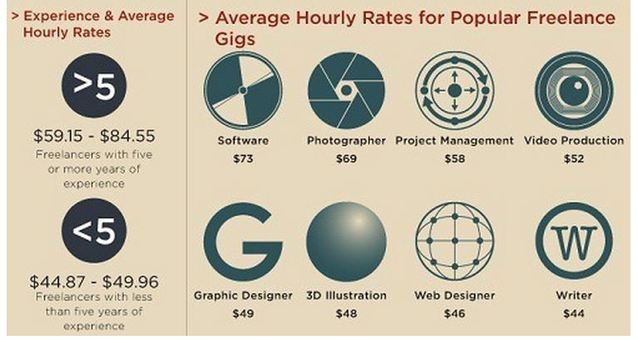
When you ask a freelancer why he or she started freelancing, you’ll get answers like ‘I wanted to work for myself’, ‘I love being my own boss’, ‘I freelance for the flexibility it provides’ etc. At the heart of it, all those answers mean the same thing: they wanted to escape the cubicle nation.

While freelancers may indeed have escaped ‘imprisonment’ in a cubicle, they can’t completely escape all the things that made their corporate life difficult. Actually because you’re out on your own now (in freelancing), you have to do all the things that your colleagues in their respective departments do on behalf of the company.

In any case, you should know that there are elements that remain the same in both the corporate working life and when you are out of it, and prepare accordingly.


1. Salary/Rate Negotiations
In a corporate job, 9-to-5′ers get a fixed salary and structured pay raise. On the surface, freelancers are the exact opposite. They set their own rates and can raise them whenever they want. In reality however, regular employees negotiate their salary much like how freelancers negotiate their rates with clients.

The only difference is that 9-to-5′ers only do it when accepting a job or negotiating a raise; freelancers do it on a regular, client-by-client basis. So unless you have fixed rates stated on your website, you’re actually negotiating more on your rates than you ever did over your full-time job salary.

2. Accountability
Freelancers boast of not having to be accountable to anyone but themselves. I beg to differ. We’re accountable to our clients. Sure, no one asks us what we’re doing with our time, or checks in on us throughout the day, but on the day of the deadline, the client expect to get their results from you.

Ultimately, a freelancer is accountable to his/her client. Miss a deadline and you can’t simply say ‘Oh sorry, I wasn’t able to meet the deadline.’ Explanations must be given and in most cases, a client is well has the right to dock pay due to your tardiness.

While full-timers report to their superiors, freelancers report to their clients. The accountability cycle is there – it’s just the names and designation of who we report to that has changed.

3. Responsibility
While you might not be completely responsible for a single project or deadline, working in a company gives you a bit of a safety net as far as taking the blame is concerned, when things go wrong. In a corporate setting, the manager takes the rap for a failed project regardless of which of his or her subordinates made the fluke.

In freelancing, congratulations, you get to shoulder ALL the blame regardless of your job function, when things go wrong.

4. Office Politics
Office workers deal with office politics and the different behaviours and personalities of their colleagues on a daily basis. From the passive aggressive co-worker to the know-it-all colleague, the limelight hogger to the boss’ pet. If you have ever worked in an office setting, chances are you have seen them all.

Freelancers see these characters every day too – only instead of co-workers, they experience them in their clients. Gather two or more freelancers together and the topic of client personalities invariably comes up.

5. Working After Hours
If you started freelancing because you wanted the flexibility of working your own hours or less hours, then it probably didn’t take you long to discover that you actually work more hours as a freelancer than you did as a full timer.

Even though plenty of people work after-hours in a corporate job, for freelancers, it’s basically a must. Freelancers often find themselves working nights and even weekends to meet deadlines. If they want to make a success of their freelance business, working long, hard hours is a requirement.

6. Getting A Promotion
In a corporate setting employees get promotions as recognition of their hard work and dedication. For freelancers, it’s pretty much the same, except they give themselves the promotion, or a break, or a raise, or a new gadget etc. Getting a raise in their rates, and handling bigger clients, etc are all part of that promotion.

7. Bigger & Better Opportunities
Whether it’s within the company or with another, corporate employees are always on the lookout for their next big break – be it a new designation, job, benefits or environment. Freelancers are the same.

We’re always on the lookout for our next big client. We’re always looking for bigger and better opportunities that’ll help us earn more. Just as no employee sticks to one company for his entire life, a freelancer doesn’t stick to that one client. It’s simply not in the nature of how a freelance business is done. Sure, every freelancer has clients who retain them but that partnership is not indefinite. Eventually they will move on to other clients.


======================================================================================

So What’s The Difference? If there are so many similarities, are we just fooling ourselves into believing we’re better off as freelancers? Is making the switch from a corporate full-time job to a freelancing business just a change in the scenery?

The answer is no. There is a big difference between a full time corporate job and a freelance one: flexibility and control. In a full-time job, you don’t have flexibility. You can’t start work later if you want to go to the gym in the morning, you can’t take the random afternoon off and you certainly can’t just turn off your computer and leave work to go pick up your kids in the middle of the day.

By Samar Owais

0 Comments

Are You Your Own Worst Boss?

8/1/2012

0 Comments

 
Picture

Wise Boss?

Nellie Akalp is the CEO of CorpNet.com, an online legal document filing service, where she helps entrepreneurs incorporate or form an LLC for their new businesses. Connect with Nellie on Twitter or visit her free resource center.

Starting a business gives you the opportunity of running your own show. But many also assume it means the end of the 9-to-5 grind, or no more uninspiring projects. Yet, this rosy picture doesn’t always reflect the reality of being in charge.


That’s because, all too often, self-employed individuals are overworked, very stressed, and simply underpaid. If that sounds familiar, here are six ways you can be a better boss to yourself.

1. Invest in Things That Will Help You Do a Better Job
Self-employed individuals sometimes make absurd sacrifices to save a few dollars. Unfortunately, that old computer or software version may be holding you back. Don’t hold the purse strings too tightly when it comes to those expenses that could help you be more productive and satisfied on a daily basis. For example, take some time to see if there are new software or online tools that could help you get more done in less time.

2. Invest in Your Education
Great entrepreneurs are always learning. Don’t hesitate to invest in conferences, training sessions, classes, even networking events. You’ll be able to learn new skills, gain insight needed to expand your business, and make valuable contacts. Look for relevant industry seminars and conferences, local chamber of commerce events, even extended learning classes at a local college or community center.

3. Invest in a Great Benefits Package
When you’re self-employed, you get freedom and flexibility, but you lose the company-provided benefits package and other perks of a full-time employee. This means you’ll need to invest in your own healthcare and retirement.

For healthcare, make a list of what you want, then talk to an insurance broker about your possible insurance options. For many self-employed people, especially sole proprietors and partnerships, a high-deductible plan with an HSA is usually a solid bet from a financial standpoint. Depending on your business structure, you may find you can deduct most, if not all, of your insurance premiums for you and family members.

Consider joining an association or professional organization that offers group-based health coverage to members. For example, members of the National Association of Science Writers are eligible to participate in their group health and dental insurance. Of course, be sure to fully understand all the membership fees and dues before joining.

Additionally, as a small business owner, you have a range of possible retirement plan choices, from SEP to SIMPLE IRA plans. You may be hesitant to tie up money you might need for your everyday expenses. However, if you’re self-employed, you’ll need to get started on retirement savings now, even if it means just a small investment of $25 a month. Talk with a financial planner or CPA about the best retirement program for your situation and taxes.

4. Don’t Undervalue Your Services
Many new businesses charge the least amount possible out of fear that clients won’t pay more. Then, they worry what will happen if they ask to raise their prices. But when you set your pricing too low, you need to take on more clients and clock more hours to stay in business. What’s the result? You’re overworked and often end up with clients who don’t value your services.

At the most basic level, your business is all about earning the money you deserve for the value you bring to customers. As long as you do a great job of meeting your customer’s needs, you should be able to be compensated fairly and even raise your prices.

5. Invest in the Legal and Administrative Aspects
If you’re self-employed, then you are 100% responsible for your business. This means it’s up to you, and you alone, to make sure your business is compliant with any license and permit requirements. You should consider forming an LLC or corporation for your business. While the legal fine print may not be the most glamorous part of your business, it can be essential to your business and personal financial health. An LLC or Corp will protect your own personal assets from any company liability. So, if your company happens to be sued, your personal savings are shielded.

6. Reward Your Best Employee: You
Be sure to reward yourself when you have great moments, like landing a big client win or meeting a tough deadline. Your reward can be as creative as you’d like. Maybe even just a night off without the cellphone or computer.

Running your own business is not easy, so be sure to acknowledge each success. After all, you no longer have a boss to recognize your hard work so it’s up to you to keep yourself motivated and inspired.

 by Nellie Akalp1 

0 Comments

8 Core Beliefs of Great and Extraordinary Bosses

7/27/2012

0 Comments

 
Picture
The best managers have a fundamentally different understanding of workplace, company, and team dynamics. See what they get right.

A few years back, I interviewed some of the most successful CEOs in the world in order to discover their management secrets. I learned that the "best of the best" tend to share the following eight core beliefs.

1. Business is an ecosystem, not a battlefield.
Average bosses see business as a conflict between companies, departments and groups. They build huge armies of "troops" to order about, demonize competitors as "enemies," and treat customers as "territory" to be conquered.

Extraordinary bosses see business as a symbiosis where the most diverse firm is most likely to survive and thrive. They naturally create teams that adapt easily to new markets and can quickly form partnerships with other companies, customers ... and even competitors.

2. A company is a community, not a machine.
Average bosses consider their company to be a machine with employees as cogs. They create rigid structures with rigid rules and then try to maintain control by "pulling levers" and "steering the ship."

Extraordinary bosses see their company as a collection of individual hopes and dreams, all connected to a higher purpose. They inspire employees to dedicate themselves to the success of their peers and therefore to the community–and company–at large.

3. Management is service, not control.
Average bosses want employees to do exactly what they're told. They're hyper-aware of anything that smacks of insubordination and create environments where individual initiative is squelched by the "wait and see what the boss says" mentality.

Extraordinary bosses set a general direction and then commit themselves to obtaining the resources that their employees need to get the job done. They push decision making downward, allowing teams form their own rules and intervening only in emergencies.

4. My employees are my peers, not my children.
Average bosses see employees as inferior, immature beings who simply can't be trusted if not overseen by a patriarchal management. Employees take their cues from this attitude, expend energy on looking busy and covering their behinds.

Extraordinary bosses treat every employee as if he or she were the most important person in the firm. Excellence is expected everywhere, from the loading dock to the boardroom. As a result, employees at all levels take charge of their own destinies.

5. Motivation comes from vision, not from fear.
Average bosses see fear--of getting fired, of ridicule, of loss of privilege--as a crucial way to motivate people.  As a result, employees and managers alike become paralyzed and unable to make risky decisions.

Extraordinary bosses inspire people to see a better future and how they'll be a part of it.  As a result, employees work harder because they believe in the organization's goals, truly enjoy what they're doing and (of course) know they'll share in the rewards.

6. Change equals growth, not pain.
Average bosses see change as both complicated and threatening, something to be endured only when a firm is in desperate shape. They subconsciously torpedo change ... until it's too late.

Extraordinary bosses see change as an inevitable part of life. While they don't value change for its own sake, they know that success is only possible if employees and organization embrace new ideas and new ways of doing business.

7. Technology offers empowerment, not automation.
Average bosses adhere to the old IT-centric view that technology is primarily a way to strengthen management control and increase predictability. They install centralized computer systems that dehumanize and antagonize employees.

Extraordinary bosses see technology as a way to free human beings to be creative and to build better relationships. They adapt their back-office systems to the tools, like smartphones and tablets, that people actually want to use.

8. Work should be fun, not mere toil.
Average bosses buy into the notion that work is, at best, a necessary evil. They fully expect employees to resent having to work, and therefore tend to subconsciously define themselves as oppressors and their employees as victims. Everyone then behaves accordingly.

Extraordinary bosses see work as something that should be inherently enjoyable–and believe therefore that the most important job of manager is, as far as possible, to put people in jobs that can and will make them truly happy.

Recommended Video 1 >> Click Here
Recommended Video 2 >> Click Here
Recommended Video 3 >> Click Here

By SALES SOURCE | Geoffrey James  
0 Comments

How to Establish and Grow Business Relationships

3/25/2012

0 Comments

 
Picture
David Nour is the thought leader on relationship economics, the quantifiable value of business relationships. The Nour Group, Inc. helps organizations drive growth through unique return on their strategic relationships.

By now, you have a robust profile on LinkedIn, you tweet several times a day with hashtags, you have a Facebook Page, several videos on YouTube, and you’ve even created several clever boards on Pinterest. You attend a handful of networking events every month, and you venture out to interesting events like SXSW a couple of times every year. But after all that, how do you build your social circle and influential contacts in key centers of influence?

How do you maintain, nurture, and ideally, bridge the gap between relationship creation and relationship capitalization? How do you turn friends and followers into active, interested social currency. How do you foster engagement to create valuable, lasting relationships?

Well, it has to do with the evolution of our on- and off-line business relationships. How do our business relationships evolve, why do we screw some up, and how can we repair them? Why do some partner, client, investor, supplier or even colleague relationships tend to accelerate naturally, while others fizzle and never fully materialize as you had hoped?

Quite simply, the manner in which we build business relationships has evolved. Find out how to keep the pace.

Initial Contact
You meet someone or, ideally, are referred through a trusted introduction. Tossing an unsolicited email over the wall is a losing proposition. Online and in-person relationships are getting more sophisticated, better protected and constantly pressured for efficiency and effectiveness.


The critical focus here is to add value in every interaction, to provoke, or to provide a contrarian perspective. In other words, if you want to elevate yourself above the noise, ensure that a person remembers your conversation. I recommend that you become well-read in a variety of topics, listen intently, question constantly, and capitalize on the value of brevity (aka Twitter etiquette). Finally, get to the point without pontificating.

Additional Interaction
If, during the initial contact, you made a strong, positive and value-centric impression, people will begin to seek you out. The conversation was impactful enough to warrant immediate action on their behalf.

Their follow-up email starts, “I left our visit excited about the conversation on X topic,” or “I enjoyed meeting you and discussing X technology.” The timeliness of their response should communicate that your interaction was a priority.

But what if the roles are reversed, and you’re the one following up? Here are my recommendations.
  • Pre-Initial Contact: Research the event, the topic of discussion, potential attendees, industry trends, topical conversation starters and recent similar events. And get there early! If you’ve already been introduced online to the person you’re targeting, reinforce credibility by association. If you were engaged around an interesting topic, bring up a question to jump-start the next interaction.
  • During the Event: Engage proactively, be present in each conversation, add value, don’t be a conversation hog, and don’t distribute business cards excessively. After speaking, immediately capture a couple of notes about the conversation. Be as diligent disengaging from conversations as you were proactive in initiating them. Finally, anticipate their needs; simply meeting their current or articulated needs is not enough. Don’t let them ask you for more.
  • Immediately After: Send a brief follow-up note the same day, and include something of value, for example, a link to relevant data, a PDF of an article, a couple bullet points of interest, or an introduction to an influential relationship. Finally, proactively suggest a next step.Be interested but casual. Pace yourself — too much, too fast turns most people off. Be poignant, practical and pragmatic and always give them options, for example, “Can we meet or Skype next Tuesday or Thursday at these times? If next week is bad for you, let me know what the following week looks like on your calendar.”
  • If the person’s business stature is higher, position yourself as a peer and don’t get delegated to others down the food chain. If the business stature is same or lower, be humble and make time. Most importantly, be candid: “Apologies in advance. I travel extensively, so please don’t take my unavailability as a lack of interest — it’s simply a lack of immediate bandwidth.”
  • A Week Later: If you haven’t heard anything in a week, call and email to make sure they received your follow-up. Be professional and polished, and remember to add value at every interaction.If you don’t get any response, ask yourself whether you could have done anything differently. If you didn’t add sufficient value in your early interactions, pestering them won’t do much good. Move on and focus on working with, helping and adding value to relevant, responsive contacts.

Additional best practices: Demonstrate unquestionable integrity, have pride in the relationship, garner a personal passion to work together, and earn a person’s vested interest in the long-term viability of the relationship.

Never lose sight of the fact that your performance, execution and results rely on fostering relationships. Lack thereof will dilute your credibility and relevance. Remain competent within your industry and among your peers, and the resulting value will match the effort.
0 Comments

Steve Jobs: 20 Life Lessons

12/23/2011

0 Comments

 
Picture
I long admired his entrepreneurial spirit and business acumen and was in sheer awe of his natural instincts for what appeals to consumers. On the other hand I bristled at what I saw as his — and by extension Apple’s — occasionally capricious and even contradictory actions (App store products in or out, inability to get in front of product issues, antennae gate) and super-secretive nature.

Now, having finished the 600-plus page Steve Jobs biography by Walter Isaacson, I think I finally understand Steve Jobs. Like most of us, his personality had many sides. He could be aloof, super-intense, odd, gross, passionate, creative, driven, unfair, conciliatory and deeply introspective. He lived a rich and unique life.

Here is the highlighted interesting, surprising and relevant passages.

Don’t Wait
When the young Steve Jobs wanted to build something and needed a piece of equipment, he went straight to the source.

“He began by recalling that he had wanted to build a frequency counter when he was twelve, and he was able to look up Bill Hewlett, the founder of HP, in the phone book and call him to get parts.”

Make Your Own Reality
Steve Jobs learned early that when you don’t like how things are in your life or in your world, change them, either through action or sheer force of will.

“As Hoffman later lamented, “The reality distortion field can serve as a spur, but then reality itself hits.” – Joanna Hoffman, part of Apple’s early Macintosh team.

“I didn’t want to be a father, so I wasn’t,” Jobs later said, with only a touch of remorse in his voice.

Control Everything You Can
Steve Jobs was, to a certain degree, a hippie. However, unlike most free spirits of the 1960s-to-1970s love-in era, Jobs was a detail-oriented control freak.

“He wants to control his environment, and he sees the product as an extension of himself.”

Own Your Mistakes

Jobs could be harsh and even thoughtless. Perhaps nowhere was that more in evidence than with his first daughter. Still, as Jobs grew older and began to face mortality, he more readily admitted his mistakes.

“I’ve done a lot of things I’m not proud of, such as getting my girlfriend pregnant when I was twenty-three and the way I handled that,” Jobs said.”

Know Yourself

While not always aware of how those around him were reacting to his appearance or demeanor, Jobs had no illusions about his own formidable intellectual skills.

“Then a more disconcerting discovery began to dawn on him: He was smarter than his parents.”

Leave the Door Open for the Fantastic
Jobs was a seeker, pursuing spiritual enlightenment and body purification throughout his life. He wasn’t a particularly religious person, but did not dismiss the existence or something beyond our earth-bound realm.

“I think different religions are different doors to the same house. Sometimes I think the house exists, and sometimes I don’t. It’s the great mystery.” — Steve Jobs

Don’t Hold Back
Apple’s founder was famous for his outbursts and sometimes over-emotional responses. In product development, things were often amazing or sh_t.

“He was an enlightened being who was cruel,” she recalled. “That’s a strange combination.”– former girlfriend and mother of Jobs’ first daughter, Chrisann Brennan

Surround Yourself with Brilliance
Whether he was willing to admit it or not, Steve Jobs could not do everything. Yes, he could have a huge impact on every product and marketing campaign, but he also knew that there were others in the world with skills he did not possess. Jobs’ early partnership with Apple co-founder Steve Wozniak perfectly illustrated this fact. His early success with Wozniak provided the template for future collaborations.

“After a couple of months he was ready to test it. ‘I typed a few keys on the keyboard and I was shocked! The letters were displayed on the screen.’ It was Sunday, June 29, 1975, a milestone for the personal computer. “It was the first time in history,” Wozniak later said, “anyone had typed a character on a keyboard and seen it show up on their own computer’s screen right in front of them.”

Build a Team of A Players
Far too often, companies and managers settle for average employees. Steve Jobs recognized talent and decided that any conflict that might arise from a company full of “A”-level players would be counterbalanced by awesome output. He may have been right.

“For most things in life, the range between best and average is 30% or so. The best airplane flight, the best meal, they may be 30% better than your average one. What I saw with Woz was somebody who was fifty times better than the average engineer. He could have meetings in his head. The Mac team was an attempt to build a whole team like that, A players. People said they wouldn’t get along, they’d hate working with each other. But I realized that A players like to work with A players, they just didn’t like working with C players.”– Steve Jobs

“I’ve learned over the years that when you have really good people you don’t have to baby them,” Jobs later explained. “By expecting them to do great things, you can get them to do great things.”

Be Yourself
Steve Jobs was often so busy being himself that he had no idea how people saw him, especially in his early, dirty-hippie days.

“At meetings we had to look at his dirty feet. Sometimes, to relieve stress, he would soak his feet in the toilet, a practice that was not as soothing for his colleagues.”—Mike Markkula, Apple’s first chairman.

Be Persuasive
While it’s true that early Steve Jobs was a somewhat smelly and unpleasant person to be around, this same Steve Jobs also trained himself to stare without blinking for long periods of time and found that he could persuade people to do the seemingly impossible.

“If it could save a person’s life, would you find a way to shave ten seconds off the boot time?” he asked. Kenyon allowed that he probably could. Jobs went to a whiteboard and showed that if there were five million people using the Mac, and it took ten seconds extra to turn it on every day, that added up to three hundred million or so hours per year that people would save, which was the equivalent of at least one hundred lifetimes saved per year.”

Show Others the Way
Jobs wasn’t truly a programmer or technologist, certainly not in the way that Microsoft founder Bill Gates is, yet he had an intuitive understanding for technology and design that ended up altering the world’s expectations for computers and, more importantly, consumer electronics.

“To be honest, we didn’t know what it meant for a computer to be ‘friendly’ until Steve told us.” — Terry Oyama, part of the early Macintosh design team.

Trust Your Instincts
I have, in my own career, navigated by gut on more than one occasion. Steve Jobs, though, had a deep and abiding belief in his own tastes and believed with utter certainty that if he liked something, the public would as well. He was almost invariably right.

“Did Alexander Graham Bell do any market research before he invented the telephone?” — Steve Jobs

Take Risks
Throughout his career, Steve Jobs took chances, first with the launch of Apple, then in walking away from it and then returning in 1997. In an era when most companies were figuring out ways to diversify, Apple — under Job’s leadership — shed businesses and products, and focused on relatively few areas. He was also willing to steer the entire Apple ship (or at least some aspects of it) in a single direction if he thought it would generate future success.

“One of Jobs’ management philosophies was that it is crucial, every now and then, to roll the dice and ‘bet the company’ on some new idea or technology.”

“I had this crazy idea that we could sell just as many Macs by advertising the iPod. In addition, the iPod would position Apple as evoking innovation and youth. So I moved $75 million of advertising money to the iPod, even though the category didn’t justify one hundredth of that. That meant that we completely dominated the market for music players. We outspent everybody by a factor of about a hundred.” — Steve Jobs.

Follow Great with Great
In everything from products to movies (under Pixar), Steve Jobs sought to create great follow-ups. He wasn’t so successful in the early part of his career (see Lisa), but his third acts to Pixar and Apple proved he had the sequel touch.

“There’s a classic thing in business, which is the second-product syndrome,” Jobs later said. It comes from not understanding what made your first product so successful. “I lived through that at Apple. My feeling was, if we got through our second film, we’d make it.”

Make Tough Decisions

Good managers and leaders are willing to do hard work and, often, make unpopular decisions. Jobs apparently had little concern about being liked and therefore was well-equipped to make tough choices.

“The most visible decision he made was to kill, once and for all, the Newton, the personal digital assistant with the almost-good handwriting-recognition system.”

Presentation Can Make a World of Difference
The Apple founder hated PowerPoint presentations, but perhaps somewhat uncharacteristically, believed elegant product presentation was critical.

“Packaging can be theater, it can create a story.” — Jony Ive, Apple designer.

Find a Way to Balance Your Intensity
It’s unclear if Steve Jobs ever truly mellowed, but he did learn that a buffer between him and the rest of Apple could be useful.

“In a company that was led by a CEO prone to tantrums and withering blasts, Cook commanded situations with a calm demeanor, a soothing Alabama accent, and silent stares.”

Live for Today
Even as Steve Jobs struggled with cancer, he rarely slowed down. If anything, the disease helped him focus his efforts and pursue some of his grandest dreams.

“Remembering that I’ll be dead soon is the most important tool I’ve ever encountered to help me make the big choices in life.” — Steve Jobs

“Remembering that you are going to die is the best way I know to avoid the trap of thinking you have something to lose. You are already naked. There is no reason not to follow your heart.” — Steve Jobs

Share Your Wisdom
Steve Jobs was not a philanthropic soul. He had a passion for products and success, but it wasn’t until he became quite ill that he started reaching out and offering his wisdom to others in the tech community.

“I will continue to do that with people like Mark Zuckerberg too. That’s how I’m going to spend part of the time I have left. I can help the next generation remember the lineage of great companies here and how to continue the tradition. The Valley has been very supportive of me. I should do my best to repay.” — Steve Jobs

by Lance Ulanoff 
0 Comments

50 of the most Stunning 3d Renders!!!

11/23/2010

1 Comment

 
These 3D renders from all over the internet. I personally think this turned out to be quite a nice selection.
Picture
Picture
Picture
1 Comment
Forward>>
    Picture
    360' Blog Home Button

    Categories

    All
    Build A Useful Skills
    Business Investment
    Courier Services
    Creative & Useful Web Tools
    Design & Advertising
    Digital Signage
    E Commerce
    Event & Exhibitions
    Food & Drinks
    Free Treasure
    Great Business Skills
    Inspiration
    Online Payment
    Social Media


    Archives

    May 2026
    April 2026
    March 2026
    October 2025
    June 2025
    April 2025
    March 2025
    January 2022
    December 2021
    May 2021
    December 2020
    July 2020
    April 2020
    December 2019
    May 2018
    February 2018
    January 2018
    September 2017
    July 2017
    June 2013
    May 2013
    February 2013
    December 2012
    November 2012
    August 2012
    July 2012
    June 2012
    March 2012
    February 2012
    January 2012
    December 2011
    November 2011
    October 2011
    August 2011
    July 2011
    June 2011
    May 2011
    February 2011
    December 2010
    November 2010


    free counters
​​► Tension Fabric Booth
​​► T Bunting Stand
► L Stand Bunting
► Pop Up Display
► Roll Up Display
► Poster Stand / Menu Holder
► Signage Stand
► Brochure Stand Floor
► Desktop Brochure Holder
​
► Table Booth, Kiosk & Counter
► Promotion Table Supplier
► Tower Display / Pillar Display
► Backdrop Wall Display
► Folding Panel Display
► iPad Tablet Floor Stand
► Easel Stand Poster
► T Bar Bunting / Banner Stand
​
► 3D Hologram Fans Display
► Wall Sticker Printing & Installation
► Car Wrap Sticker Installation
► Truss System Series
► Poster Snap Frame
​
► Portable Stage
► Light Box Display Series
► Q Up Stand / Queue Barrier Stand
​
► Flag (Flying) Banner Beach Flagpole Stand
► TV Floor Stand Holder LCD Monitor Stand

​► Digital Signage Display
​
► Wheel Of Fortune / Roda Impian
► Display system Accessories
ADDRESS
Thunder Advertising
​Company Reg. 201603338055 (002593863-W)
No. 28, Dataran Mentari, 3rd Floor,
Jalan PJS 8/18, Bandar Sunway, 46150
​Petaling Jaya, Selangor. ​ (Use Lift to go 3rd Floor Above Nasi Kandar Restaurant)
CONTACT
  • H/P: +6 012 3419 149 - Sales
  • H/P: +6 010 233 8069 - Sales
  • H/P: +6 016 368 9939 - Sales​
  • ​​Office: +6 03 5891 7799 - Office
  • Google Map >>
EMAIL
  • ​​​[email protected]
  • [email protected]
REQUEST QUOTATION
© Copyright Manxeon 4.0 2026 - All Rights Reserved
文 A Translate Page
Manxeon